

Learning Tools

Curriculum
All math topics


What Are Power and Root Functions?
A power function is a special case of a polynomial function. A power function consists of only one term—a polynomial of the form .
Theory
Power and Root Functions
A power function is a function where is given as a number multiplied by an arbitrary power of . The function can be written as
If is a fraction, we call the power function a root function, since it can be rewritten using the formula
Below is a brief description of how each function behaves for different values of .
-
If is a even number, then you get a parabola.
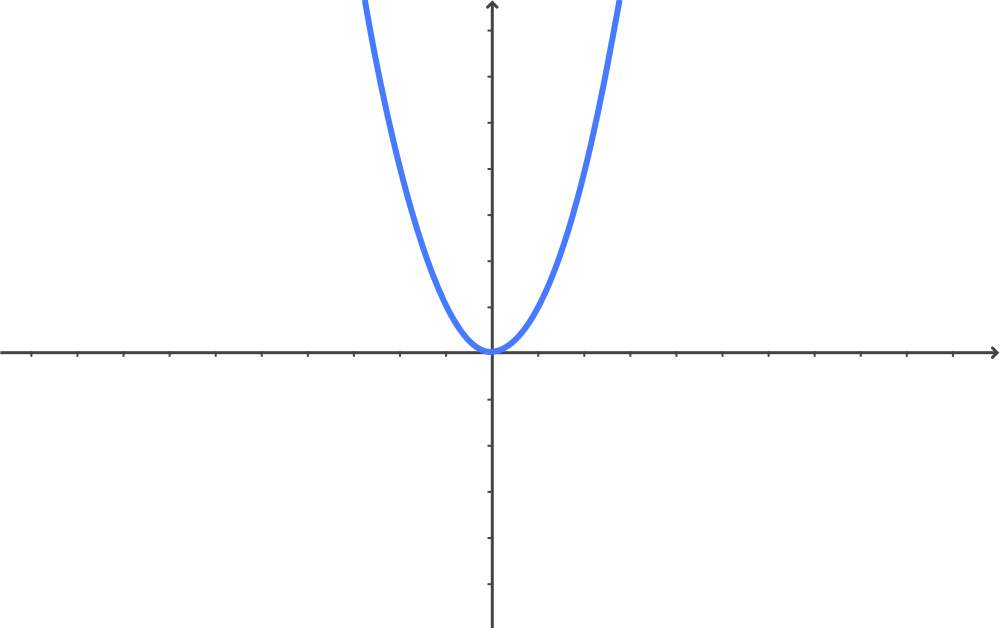
-
If is an odd number, you get graphs that are extended along the entire -axis.
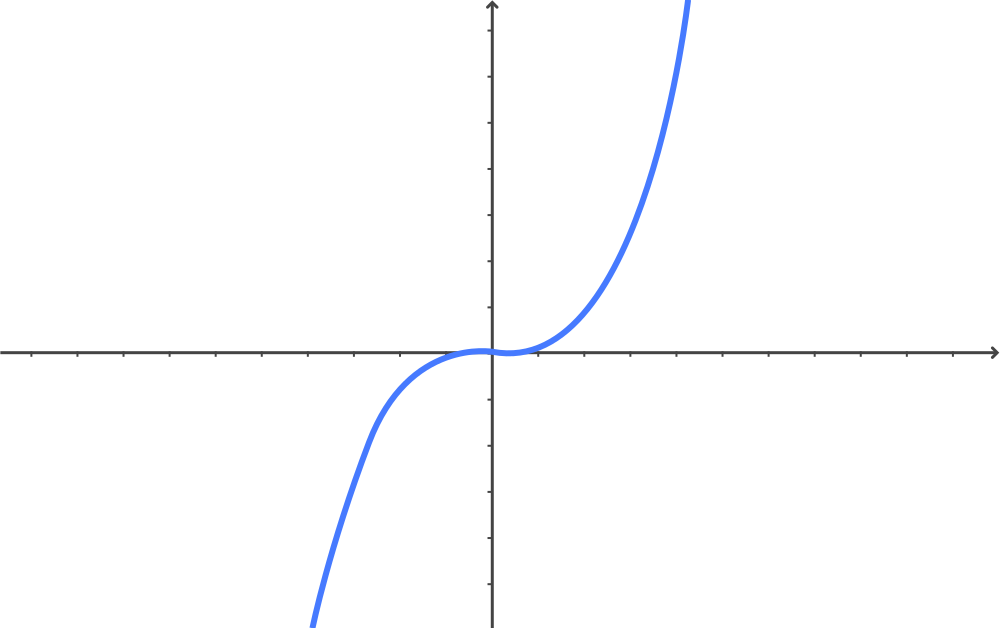
-
If , you get a straight line that intersects .
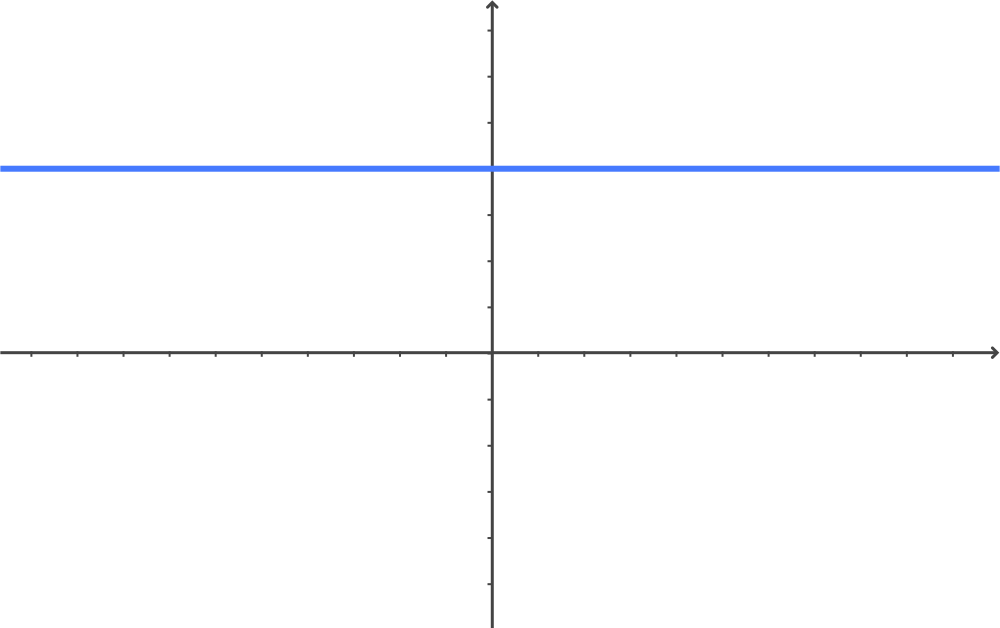
-
If , you get rational functions.
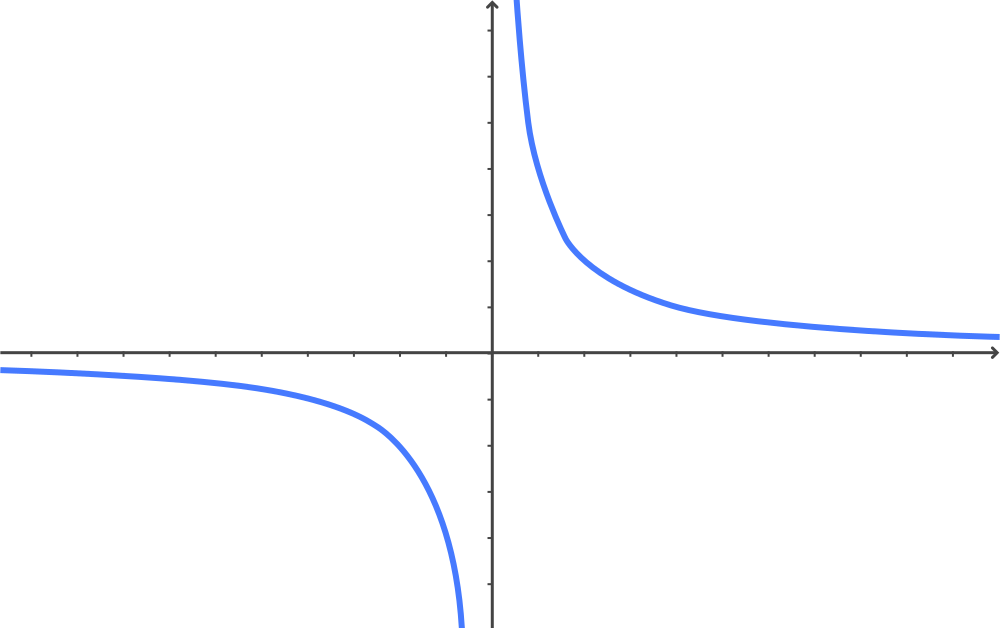
-
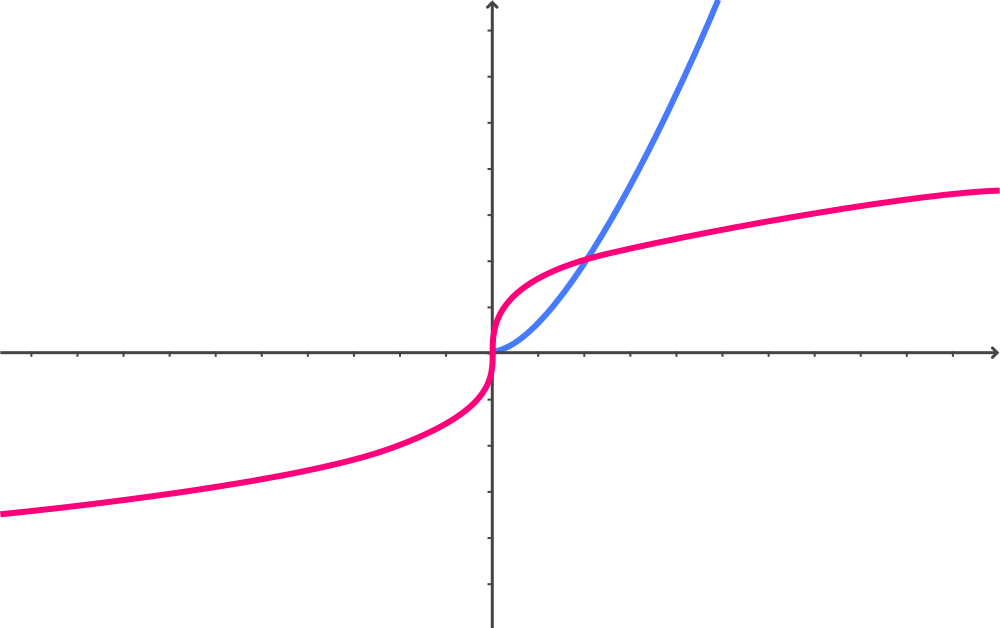
If ( is a fraction), you get a root function.
-
If is in the form , and if and have no factors in common, then the graph begins in the origin.
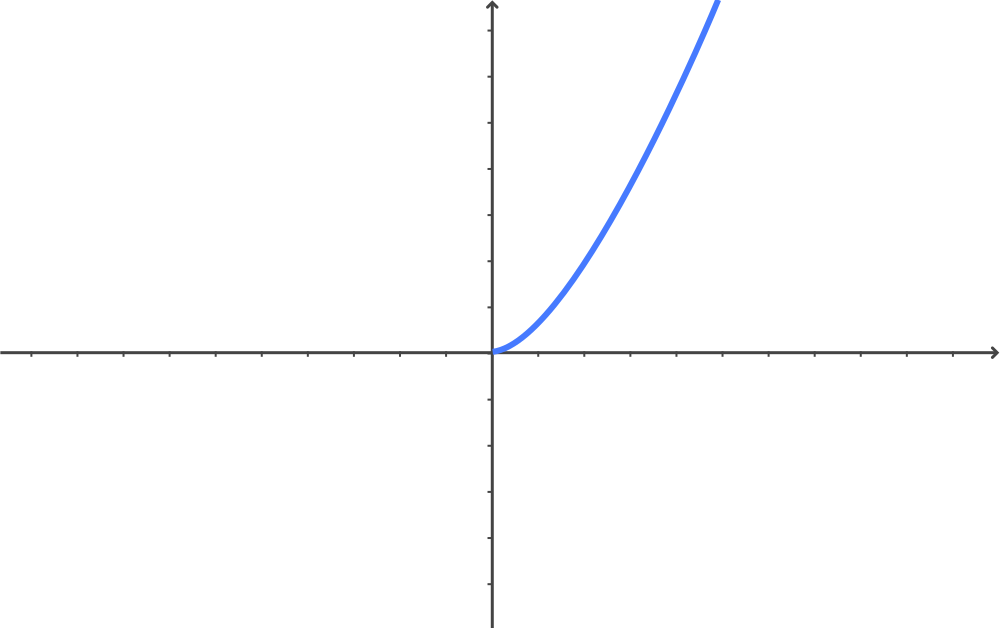
Note! Root functions are defined only for positive values of , since you can only take the even root (, , ,) of numbers greater than or equal to 0.
Example 1
is a power function and a root equation
Example 2
is a power function and a polynomial function.
Example 3
is a power function and a rational function.
